

How Does God Define Wisdom?
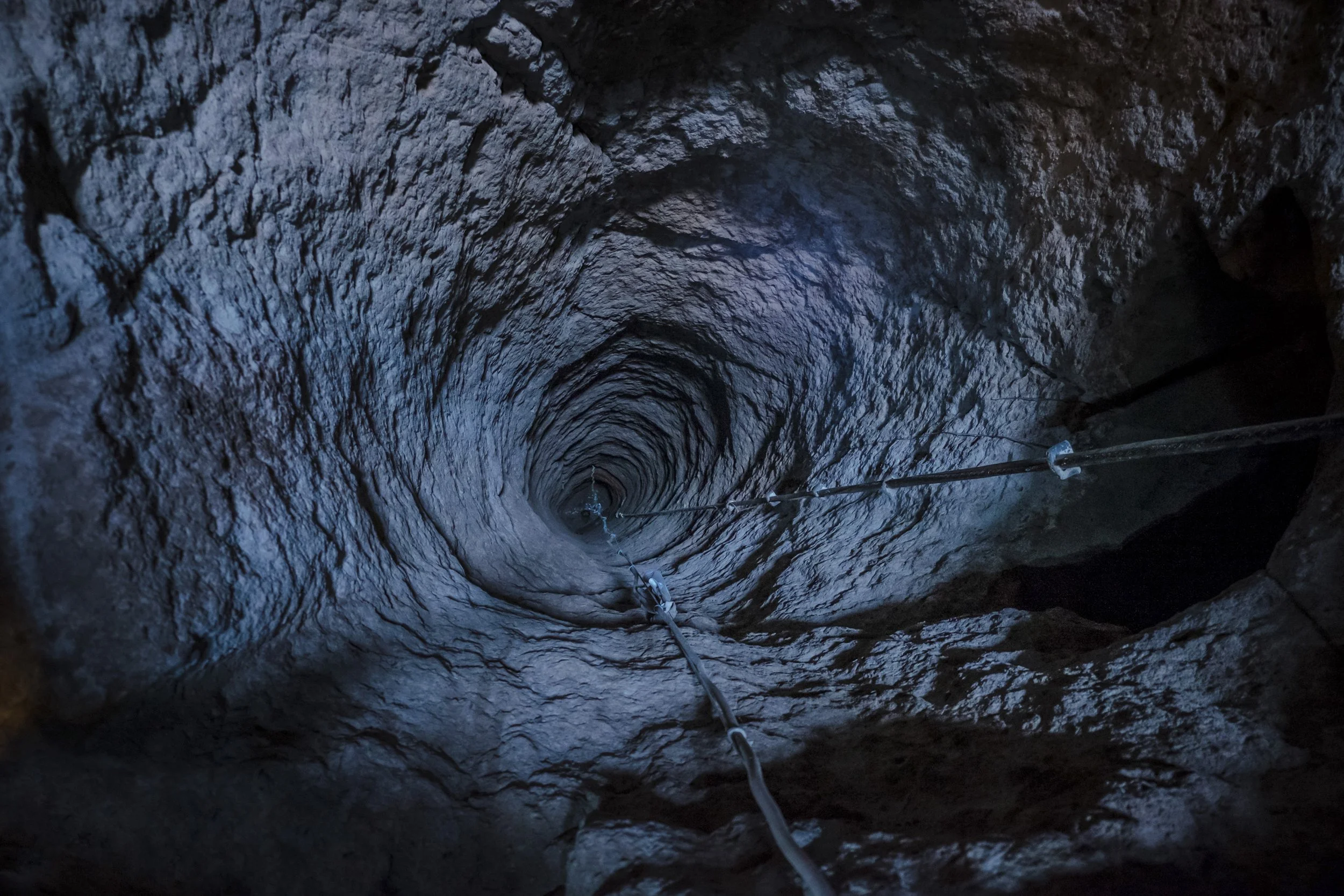
photo: Gilitukha
by Professor of Writing and Literature, Karyn Hecht
One of my favorite chapters in the Bible is a passage from Job. If you’ve had me for a class, you have likely heard me read this for a devotional. I read it out loud so my students can hear and see and taste what Job is describing.
Why do I like this chapter so much? Because Job describes God’s stunning creation, because it contains literary devices, because it shows us the character of God, and because it challenges us to decide what is truly valuable—and then to act accordingly.
The chapter starts in a mine, as miners dig in the dark caves and deeper rocks for iron, copper, and gold. In a sense we, the readers, are in the dark as well, as we wonder why the author is writing about mining. It’s a mystery where these verses are headed, but 12 verses in, Job asks the key question. He repeats the question 8 verses later, and then he solves the mystery at the end of the chapter.
So put on your mining gear, and let’s go deep into the rocks with Job.
Job 28
“Surely there is a mine for silver,
And a place for gold that they refine.
Iron is taken out of the earth,
And copper is smelted from the ore.
Man puts an end to darkness
And searches out—to the farthest limit—the ore in gloom and deep darkness.
He opens shafts in a valley away from where anyone lives;
They are forgotten by travelers;
They hang in the air far away from mankind; they swing to and fro.
As for the earth (soil), out of it comes bread,
But underneath, it is turned up as by fire.
Its stones are the place of sapphires,
And it has dust of gold.
That path no bird of prey knows,
And the falcon’s eye has not seen it.
The proud beasts have not trodden it;
The lion has not passed over it.
Man puts his hand to the flinty rock
And overturns mountains by the roots.
He cuts out channels in the rocks,
And his eye sees every precious thing.
He dams up the streams so that they do not trickle,
And the thing that is hidden, he brings out to light.
But where shall wisdom be found?
And where is the place of understanding?
Man does not know its worth,
And wisdom is not found in the land of the living.
The deep says, ‘It is not in me,’
And the sea says, ‘It is not with me.’
Wisdom cannot be bought for gold,
And silver cannot be weighed as its price.
It cannot be valued in the gold of Ophir,
In precious onyx or sapphire.
Gold and glass cannot equal wisdom,
nor can it be exchanged for jewels of fine gold.
No mention shall be made of coral or of crystal;
The price of wisdom is above pearls.
The topaz of Ethiopia cannot equal it,
Nor can wisdom be valued in pure gold.
From where, then, does wisdom come?
And where is the place of understanding?
It is hidden from the eyes of all living
And concealed from the birds of the air.
Abaddon and Death say,
‘We have heard a rumor of it with our ears.’
God understands the way to wisdom,
And he knows its place.
For he looks to the ends of the earth
And sees everything under the heavens.
When he gave to the wind its weight and apportioned the waters by measure,
When he made a decree for the rain and a way for the lightning of the thunder,
Then he saw wisdom and declared it;
He established wisdom, and searched it out.
And God said to man,
‘Behold, the fear of the Lord, that is wisdom,
And to turn away from evil is understanding.’”
This is a surprise answer! Throughout the chapter, we’ve been wondering where wisdom and understanding can be found—which is answered—but we also find out the Divine definitions of wisdom and understanding.
So how does God define wisdom?
First—to fear and reverence the Lord
Second—to turn away from evil
What do I like about this chapter, Job 28? Several aspects: first, it’s written as a drama with lots of active characters. We see the miners swinging to and fro, the birds of prey and falcons flying overhead, the lions running through the fields, and we hear the ringing of the pickaxes and the explosions of dynamite making channels through the rocks.
Second, I enjoy the personification. I like that the deep sea and then Abaddon and death all give their input during this search for wisdom.
Third, I like picturing all the gemstones and gold and silver under the surface of the earth, and the coral and pearls deep in the sea. Just like God-given wisdom, these stunning jewels and minerals are hidden under the surface, not easy to find just by walking on the dirt or grass above.
So, the question for me, and for you, is this: do we value God’s wisdom more than topaz or sapphires or pure gold or pearls or other precious and valuable things God has created?
Do we value fearing God more than anything else, treating Him with utmost reverence and awe?
And do we value turning away from evil instead of doing what seems right in our own eyes?
Job says in an earlier chapter (12:13)—“With God are wisdom and might; he has counsel and understanding.”
Amen!